
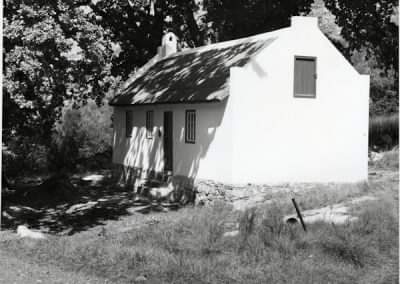
Near the top of Michell’s Pass, just before you reach Ceres in the Western Cape, stand an old toll house nuzzled between big oak trees and rumored to be the home to a mysterious ghost.
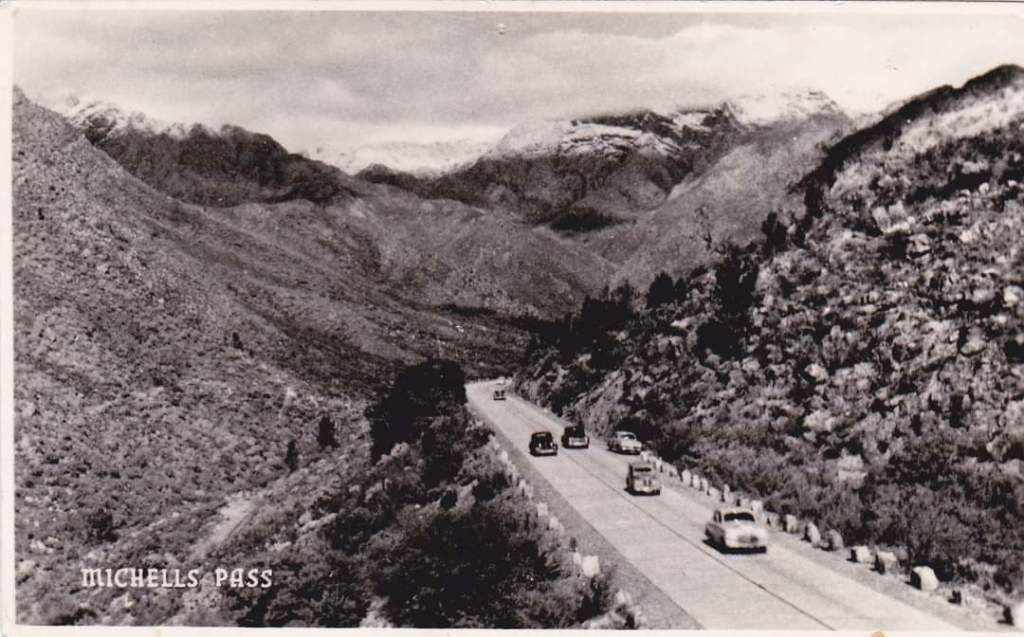
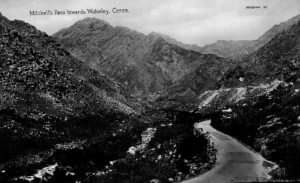
The Michell’s Pass’s construction, as we know it today, started in 1840 by Andrew Geddes Bain, also known for the construction of Bain’s Kloof pass near Wellington. When it finally opened in 1848, it was named Michell’s Pass in honor of the Superintendent of Works, probably because Bain’s Kloof was already taken. Since then, the pass has been widened and modernised, but for the most part, it still follows Bain’s route, as we know it today.
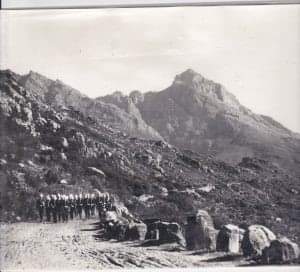
Now a single-lane road in and out of the pass, this was not the case a hundred years before, when the only throughway was the game paths and thoroughfares used by the Khoekhoen and the San, moving through the formidable Skurweberg. Although these roads were very dangerous the 18th-century cattle farmers didn’t have a choice but to use them to get their cattle to and from the high Bokkeveld farmlands and the Tulbagh valley, down below.
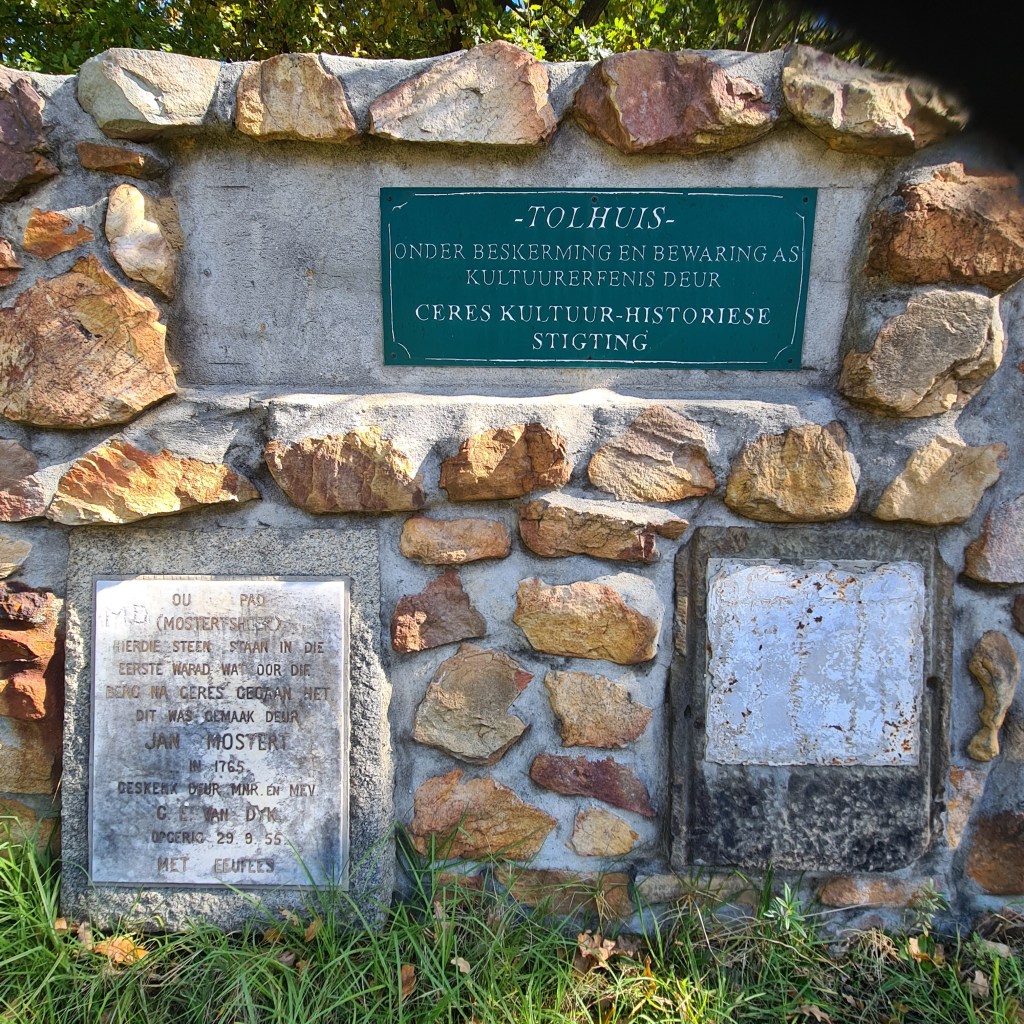
Then a farmer Jan Mostert, who lived on the farm Wolwekloof at the foot of the kloof, decided out of practicality and necessity, to build a rough and precautious road through this valley in 1765.
This road was certainly not built for joyrides as it slashed through the Skurweberg at steep angles, crisscrossed the river, and was so steep under the waterfall that the wagons had to be taken apart and carried over the mountain in pieces, causing many to lose their lives in accidents. This dicey and dangerous pass was known as the Mostert’s Hoek Pass, which was used for nearly a century. Signs of ruts of wagons that struggled over this pass for years can still be seen today in the original pass.
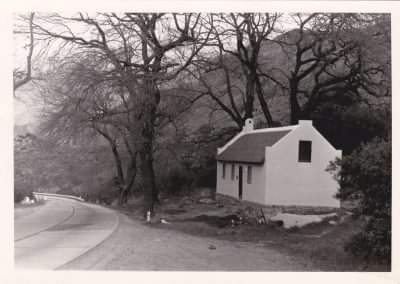
The Old Tollhouse, a thatched, whitewashed, two-roomed cottage, shaded by some huge oaks at the side of the road a few kilometers to Ceres, was built shortly after the completion of Michell’s Pass.
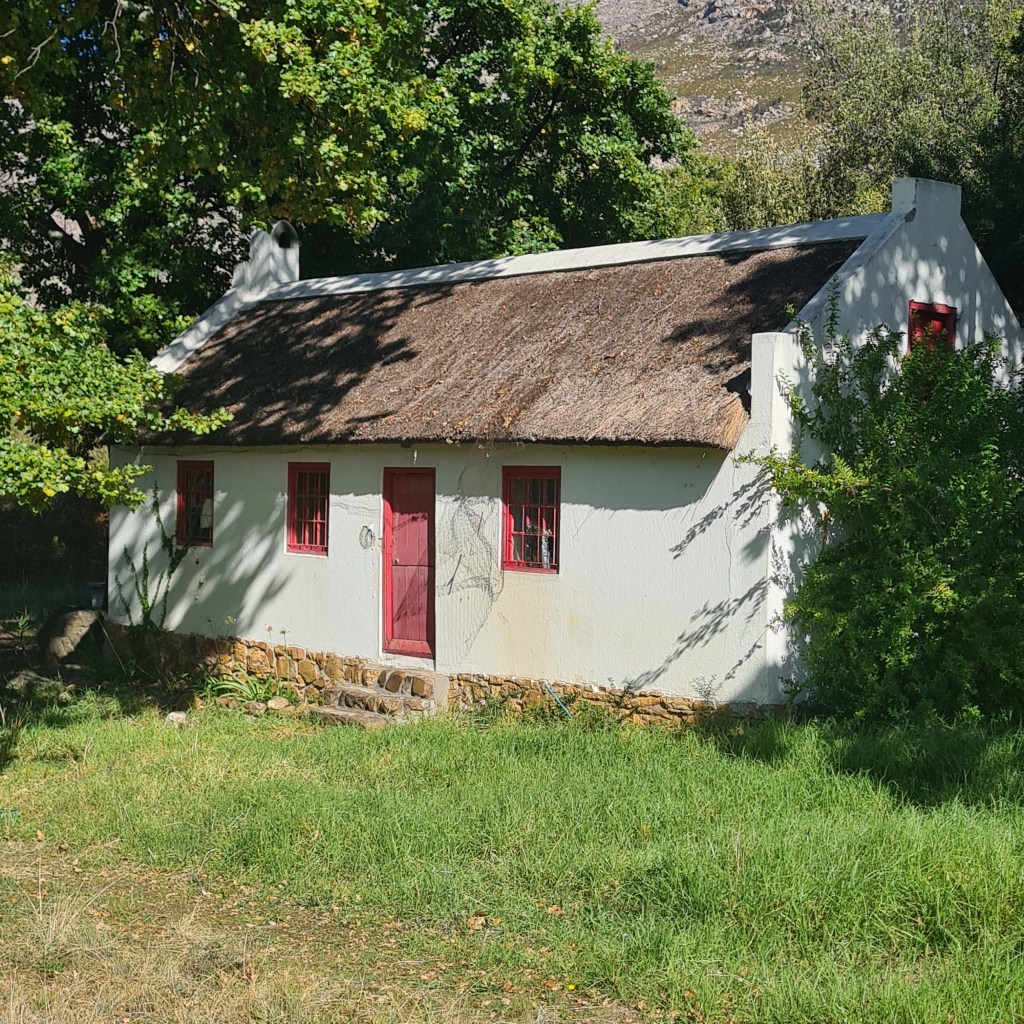
From 1 January 1849 the tollkeeper lived and worked there, day in and out collecting the toll charges on animals and vehicles: 3 d per wheel of four-wheeled vehicles without remschoens; 2 d per wheel of other vehicles; 1 d per pack animal; ½ d each for sheep, goats or pigs, and 2 d each for all other animals.
After the rebuild of the pass in August 1988, the tollhouse was carefully restored and maintained as a national monument, after being damaged by the 1969 earthquake. Even today, you can still find the single stone pillar outside the house, a relic of the old toll gate. Several tenants have lived in this building through the years since being proclaimed a historical monument.
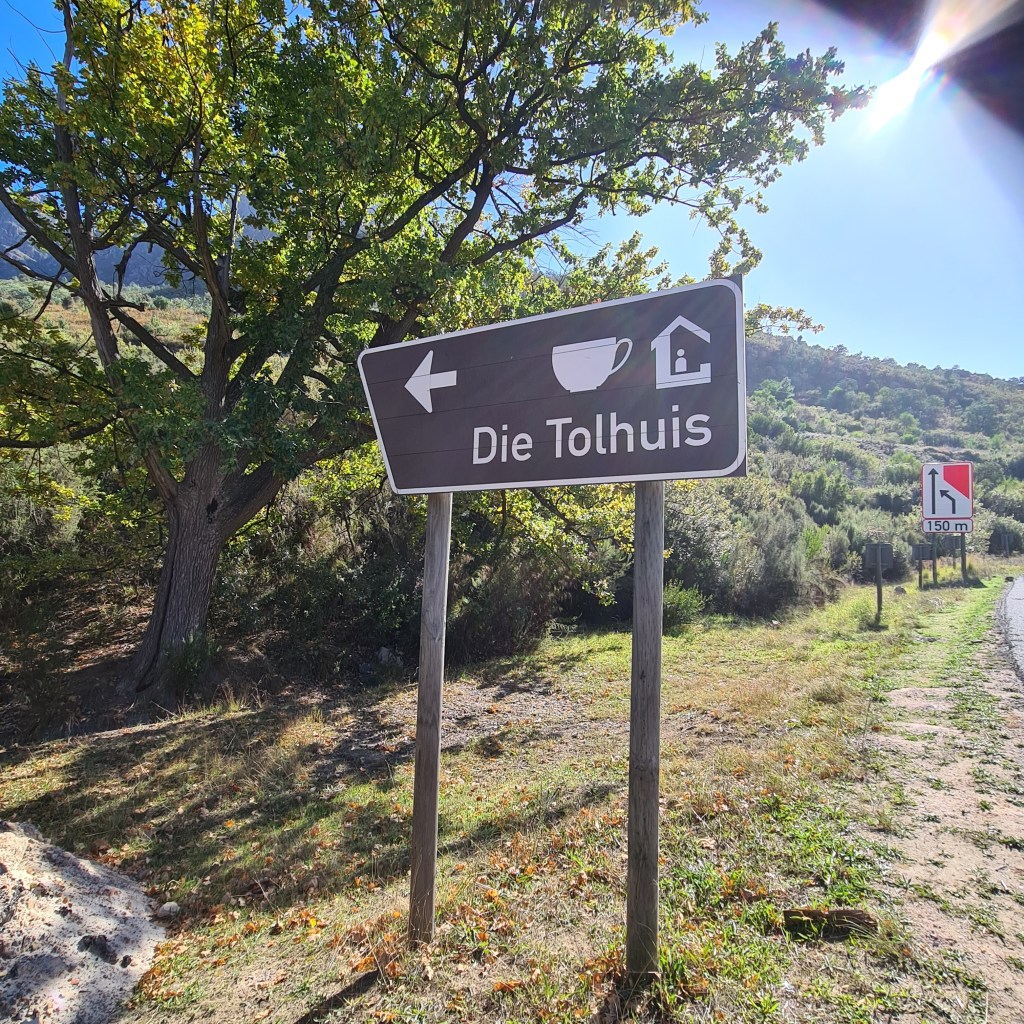
In December 1990 a Ceres resident, Mrs. Lynette Bosman, took it over and turned it into a tea-room and craft shop. It used to be a delightful daytime stop for a bite to eat and browse. But it was just as well, it was only open during daylight hours because as soon as night fell onto the pass, this quaint cottage became quite creepy.
Although Mrs. Lynette Bosman dreaded going to the shop at night, every now and then she had to go, although it always made her feel uncomfortable. She found the building to be very lonely and giving her a very weird and uncomfortable feeling.
What made it even worse, was the way the burglar alarm used to keep going off in the middle of the night, for no explicable reason.
What made this weird, was that if the reason for the alarm going off, was due to a real break-in, the alarm bell would ring continuously, in the control room in Ceres. But on those occasions, this was not the case. The alarm would only bell once!
The security company’s control room staff was baffled. No solution or explanation could ever be found for this. They investigated, from electrical faults to mice, with no results. With the only explanation left, it must be a ghost. “But who’s?
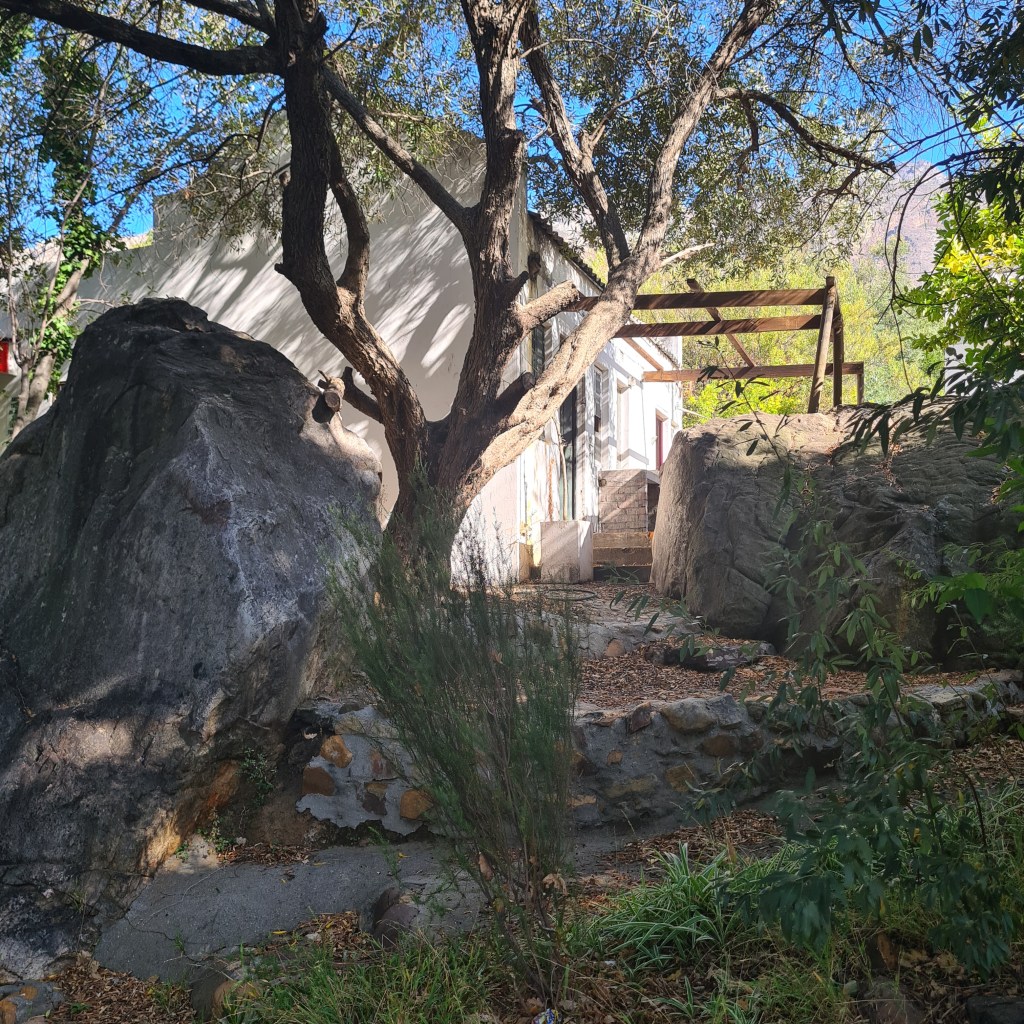
In 2009 former newspaper editors and journalists Reint & Karien Grobler opened the Tolhuis Bistro situated at the back of the old toll house monument. Operating longer hours, the Tolhuis Bistro team started to encounter the ghost of a young Victorian lady roaming the property, which they lovingly named Nellie.
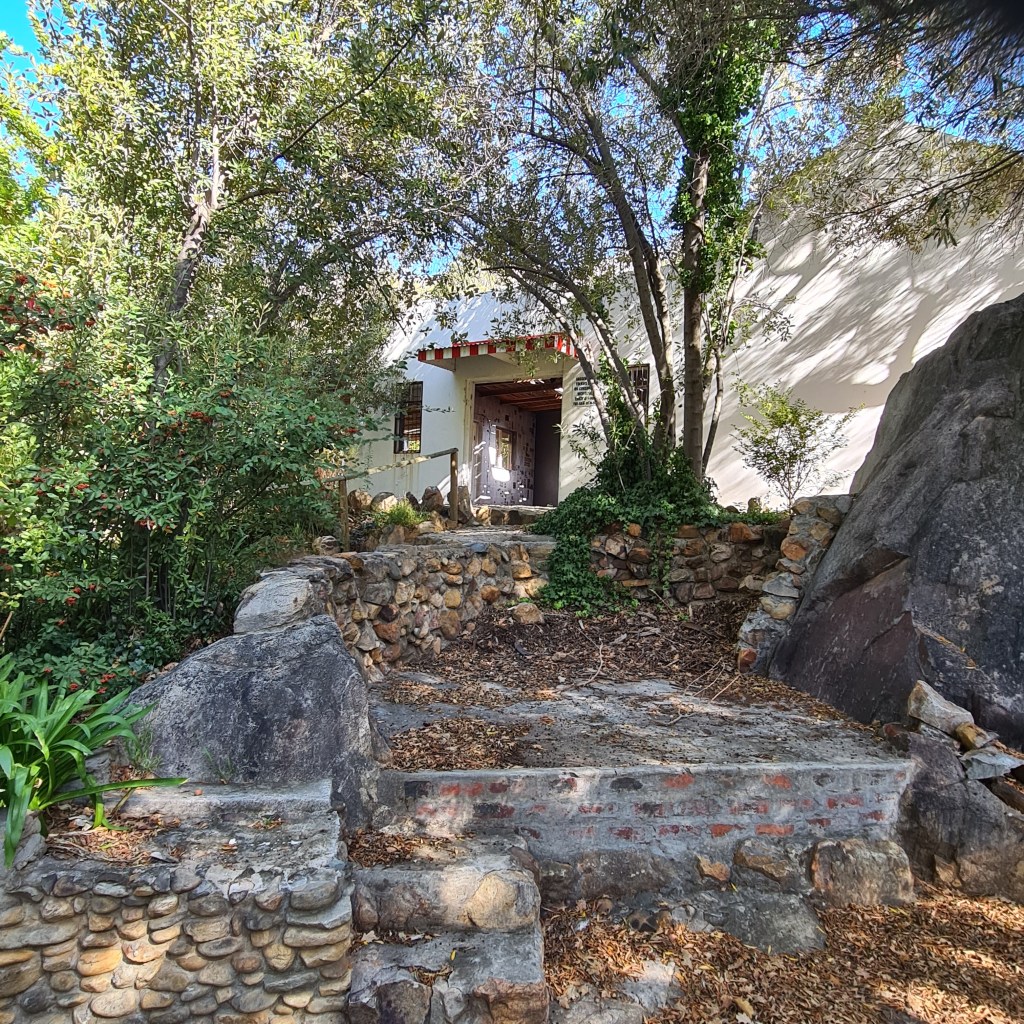
Could the ghost be of some long-forgotten traveller; footprints dented in time by people and wagons and beasts who passed by: “Threepence a wheel, tuppence a trekdier, sixpence if you only walking by?” Maybe someone who died in the days of the dangerous Mostertshoek Pass, trying to find refuge in the only building on the pass?
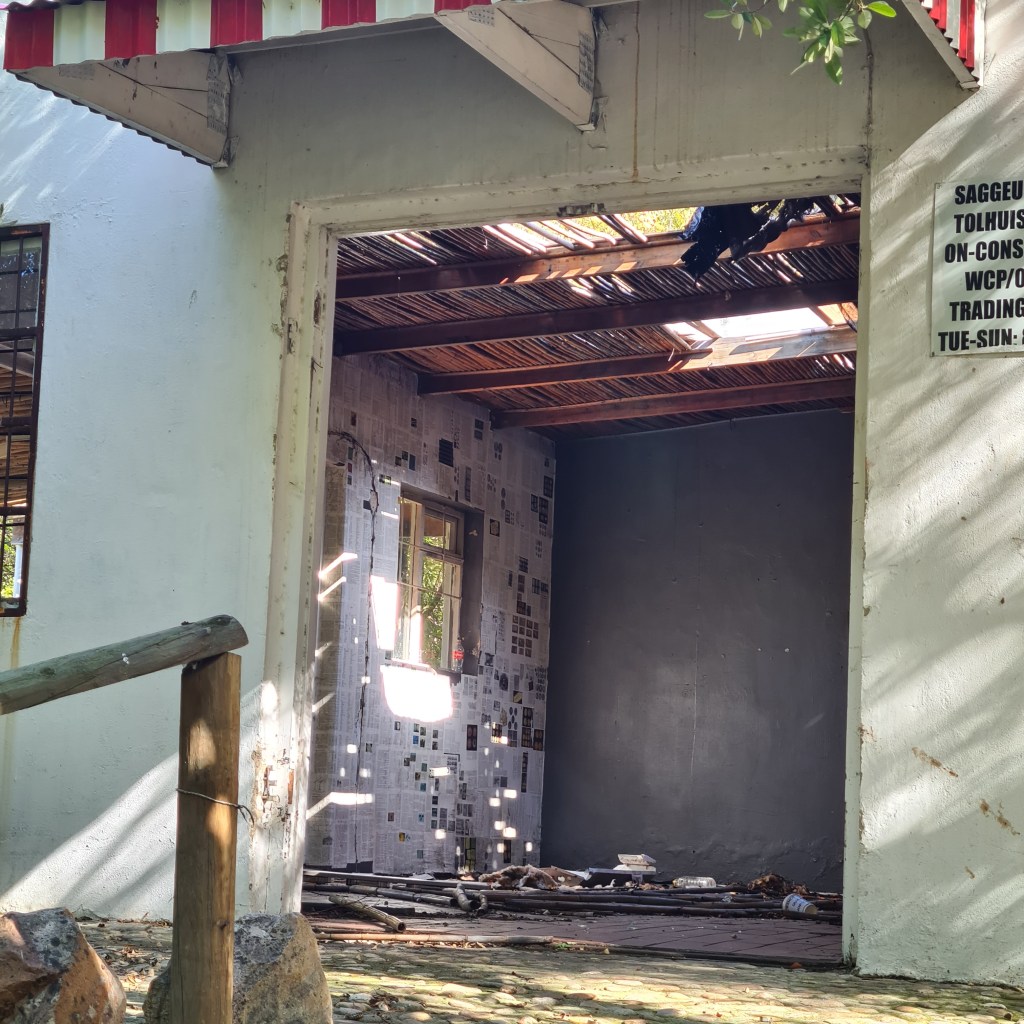
When I went to investigate the now empty cottage, I found it dislocated, but not totally stripped nor inhabited by any living humans, which was quite odd. And even though it was daylight, there was a heaviness once inside the building.
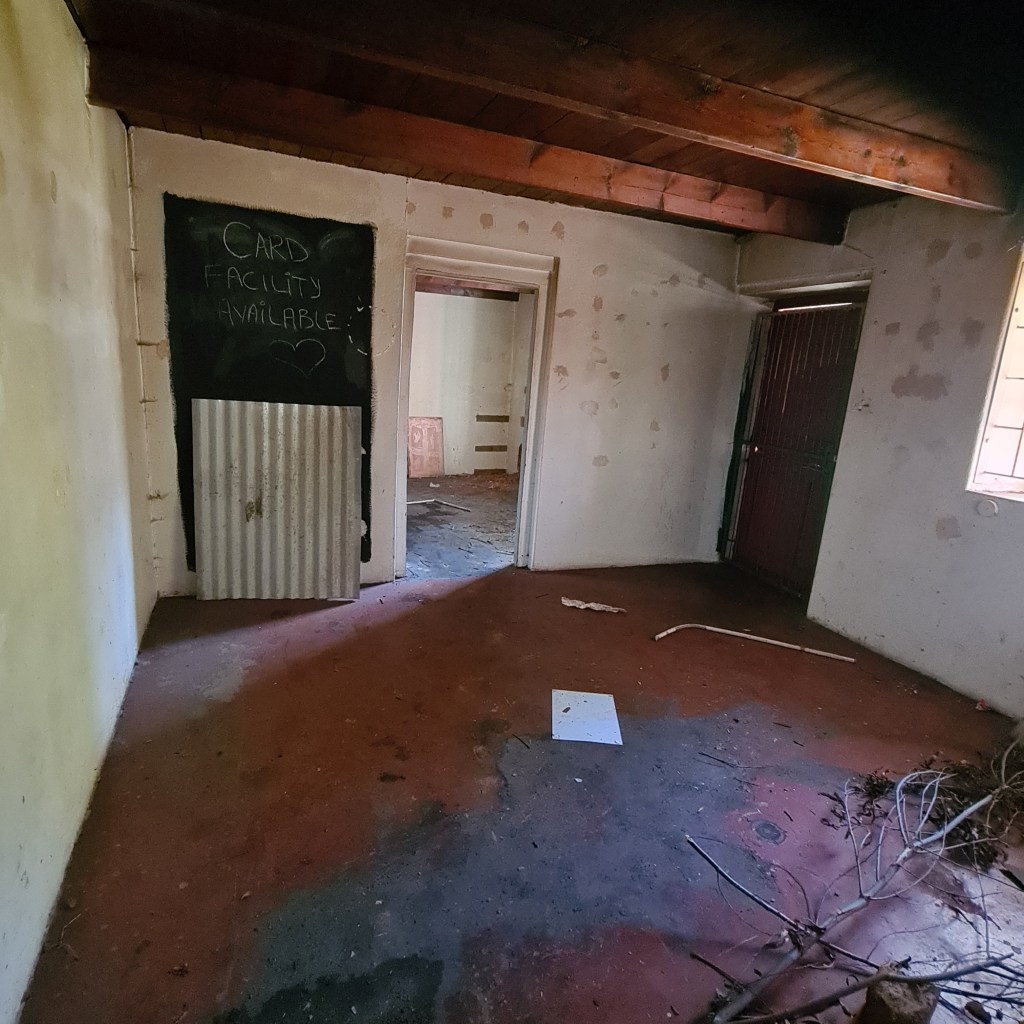
Although I didn’t get any concrete evidence, it did make me wonder if the ghostly keeper of the tollgate is still trying to do his job? Keeping track, and keeping unwanted guests at bay, or maybe just a lonely young lady looking for some company?
Black & White Photo credit: Ceres Museum
 Haunted History of South Africa